
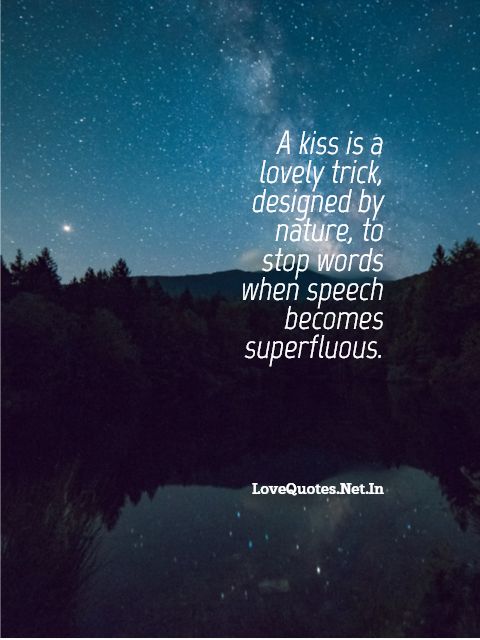
This iconic sentiment portrays a kiss as nature’s cleverest silence. It suggests that when emotions intensify, verbal communication becomes inadequate or unnecessary.
By “stopping speech,” a kiss bridges the gap between the intellectual and the physical, transforming an awkward or overwhelming moment into one of profound connection.
It is a playful yet deep observation that some feelings are simply too vast to be captured by human language alone.
“A kiss is a lovely trick designed to stop speech when words are a bit much.”
“A kiss is a lovely trick designed to stop speech when words become useless.”
“A kiss is a lovely trick designed to stop speech when words are too plenty.”
“A kiss is a lovely trick designed to stop speech when words are redundant.”
“A kiss is a lovely trick designed to stop speech when words are superflous.”
“A kiss is a lovely trick designed to stop speech when words are not enough.”
“A kiss is a lovely trick designed to stop speech when words start to fail.”
“A kiss is a lovely trick designed to stop speech when words go on too far.”
“A kiss is a lovely trick designed to stop speech when words feel too long.”
“A kiss is a lovely trick designed to stop speech when words lose their way.”
“A kiss is a lovely trick designed to stop speech when words are secondary.”
“A kiss is a lovely trick designed to stop speech when words seem to fade.”
“A kiss is a lovely trick designed to stop speech when words lack the soul.”
“A kiss is a lovely trick designed to stop speech when words are just noise.”
“A kiss is a lovely trick designed to stop speech when words are quite odd.”
“A kiss is a lovely trick designed to stop speech when words are very weak.”
“A kiss is a lovely trick designed to stop speech when words feel so small.”
“A kiss is a lovely trick designed to stop speech when words are too cold.”
“A kiss is a lovely trick designed to stop speech when words are not real.”
“A kiss is a lovely trick designed to stop speech when words are too soft.”
“A kiss is a lovely trick designed to stop speech when words are too fast.”
“A kiss is a lovely trick designed to stop speech when words are too slow.”
“A kiss is a lovely trick designed to stop speech when words are too dark.”
“A kiss is a lovely trick designed to stop speech when words are too deep.”
“A kiss is a lovely trick designed to stop speech when words are too rare.”
“A kiss is a lovely trick designed to stop speech when words are too pure.”
“A kiss is a lovely trick designed to stop speech when words are too thin.”
“A kiss is a lovely trick designed to stop speech when words are too bold.”
“A kiss is a lovely trick designed to stop speech when words are too dull.”
“A kiss is a lovely trick designed to stop speech when words are too calm.”
“A kiss is a lovely trick designed to stop speech when words are too wild.”
“A kiss is a lovely trick designed to stop speech when words are too hard.”
“A kiss is a lovely trick designed to stop speech when words are too loud.”
“A kiss is a lovely trick designed to stop speech when words are too rich.”
“A kiss is a lovely trick designed to stop speech when words are too poor.”
“A kiss is a lovely trick designed to stop speech when words are too kind.”
“A kiss is a lovely trick designed to stop speech when words are too near.”
“A kiss is a lovely trick designed to stop speech when words are too neat.”
“A kiss is a lovely trick designed to stop speech when words are too grim.”
“A kiss is a lovely trick designed to stop speech when words are too vast.”
“That kiss is a lovely trick designed to stop speech when words feel empty.”
“This kiss is a lovely trick designed to stop speech when words feel heavy.”
“Your kiss is a lovely trick designed to stop speech when words feel right.”
“Each kiss is a lovely trick designed to stop speech when words feel wrong.”
“Only kiss is a lovely trick designed to stop speech when words feel tough.”
“Such kiss is a lovely trick designed to stop speech when words feel rough.”
“Every kiss is a lovely trick designed to stop speech when words feel tight.”
“Great kiss is a lovely trick designed to stop speech when words feel light.”
“Sweet kiss is a lovely trick designed to stop speech when words feel grand.”
“Short kiss is a lovely trick designed to stop speech when words feel bland.”
“Quick kiss is a lovely trick designed to stop speech when words feel brief.”
“Small kiss is a lovely trick designed to stop speech when words feel grief.”
“Quiet kiss is a lovely trick designed to stop speech when words feel sharp.”
“First kiss is a lovely trick designed to stop speech when words feel vague.”
“Final kiss is a lovely trick designed to stop speech when words feel false.”
“True kiss is a lovely trick designed to stop speech when words feel shaky.”
“Real kiss is a lovely trick designed to stop speech when words feel petty.”
“Deep kiss is a lovely trick designed to stop speech when words feel dizzy.”
“Warm kiss is a lovely trick designed to stop speech when words feel fuzzy.”
“Cool kiss is a lovely trick designed to stop speech when words feel giddy.”
“A kiss is a lovely trick designed to stop speech when words are not home.”
“A kiss is a lovely trick designed to stop speech when words are not here.”
“A kiss is a lovely trick designed to stop speech when words are not true.”
“A kiss is a lovely trick designed to stop speech when words are not good.”
“A kiss is a lovely trick designed to stop speech when words are not wise.”
“A kiss is a lovely trick designed to stop speech when words are not calm.”
“A kiss is a lovely trick designed to stop speech when words are not bold.”
“A kiss is a lovely trick designed to stop speech when words are not fine.”
“A kiss is a lovely trick designed to stop speech when words are not cool.”
“A kiss is a lovely trick designed to stop speech when words are not safe.”
“A kiss is a lovely trick designed to stop speech when words are not fair.”
“A kiss is a lovely trick designed to stop speech when words are not free.”
“A kiss is a lovely trick designed to stop speech when words are not easy.”
“A kiss is a lovely trick designed to stop speech when words are not fast.”
“A kiss is a lovely trick designed to stop speech when words are not lost.”
“A kiss is a lovely trick designed to stop speech when words are not done.”
“A kiss is a lovely trick designed to stop speech when words are not gone.”
“A kiss is a lovely trick designed to stop speech when words are not past.”
“A kiss is a lovely trick designed to stop speech when words are not seen.”
“A kiss is a lovely trick designed to stop speech when words are not kept.”
“A kiss is a lovely trick to stop speech when words have reached an end.”
“A kiss is a lovely trick to stop speech when words have reached a wall.”
“A kiss is a lovely trick to stop speech when words have reached a peak.”
“A kiss is a lovely trick to stop speech when words have reached a halt.”
“A kiss is a lovely trick to stop speech when words have reached a limit.”
“A kiss is a lovely trick to stop speech when words have reached a point.”
“A kiss is a lovely trick to stop speech when words have reached a curve.”
“A kiss is a lovely trick to stop speech when words have reached a depth.”
“A kiss is a lovely trick to stop speech when words have reached a fever.”
“A kiss is a lovely trick to stop speech when words have reached a state.”
“A kiss is a lovely trick to stop speech when words have reached a story.”
“A kiss is a lovely trick to stop speech when words have reached a phase.”
“A kiss is a lovely trick to stop speech when words have reached a flame.”
“A kiss is a lovely trick to stop speech when words have reached a power.”
“A kiss is a lovely trick to stop speech when words have reached a heart.”
“A kiss is a lovely trick to stop speech when words have reached a sense.”
“A kiss is a lovely trick to stop speech when words have reached a dream.”
“A kiss is a lovely trick to stop speech when words have reached a voice.”
“A kiss is a lovely trick to stop speech when words have reached a world.”
“A kiss is a lovely trick to stop speech when words have reached a peace.”
“A kiss is a lovely trick to stop speech when words are far too many now.”
“A kiss is a lovely trick to stop speech when words are far too long now.”
“A kiss is a lovely trick to stop speech when words are far too weak now.”
“A kiss is a lovely trick to stop speech when words are far too soft now.”
“A kiss is a lovely trick to stop speech when words are far too thin now.”
“A kiss is a lovely trick to stop speech when words are far too dull now.”
“A kiss is a lovely trick to stop speech when words are far too cold now.”
“A kiss is a lovely trick to stop speech when words are far too slow now.”
“A kiss is a lovely trick to stop speech when words are far too calm now.”
“A kiss is a lovely trick to stop speech when words are far too hard now.”
“A kiss is a lovely trick to stop speech when words are far too loud now.”
“A kiss is a lovely trick to stop speech when words are far too fast now.”
“A kiss is a lovely trick to stop speech when words are far too near now.”
“A kiss is a lovely trick to stop speech when words are far too bold now.”
“A kiss is a lovely trick to stop speech when words are far too dark now.”
“A kiss is a lovely trick to stop speech when words are far too vast now.”
“A kiss is a lovely trick to stop speech when words are far too pure now.”
“A kiss is a lovely trick to stop speech when words are far too rich now.”
“A kiss is a lovely trick to stop speech when words are far too wise now.”
“A kiss is a lovely trick to stop speech when words are far too real now.”
A Kiss is a Lovely Trick reminds us that love thrives in small gestures, playful moments, and heartfelt connections. Through humor, tenderness, and insight, the book celebrates intimacy, courage, and joy, showing that life’s sweetest experiences often come from the simplest acts of affection and understanding.
Leave a Reply